What Is a Bluetooth Beacon and How Does It Work?
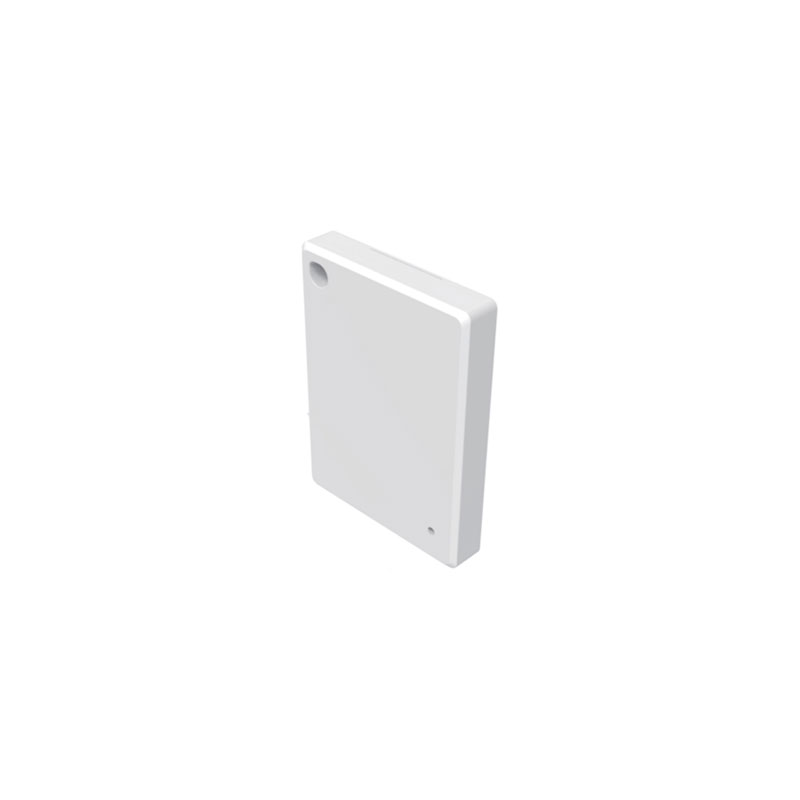
A Bluetooth Beacon is a small, low-power wireless transmitter that continuously broadcasts a fixed identifier signal using Bluetooth Low Energy (BLE) protocol. Unlike two-way communication devices, beacons operate in one direction: they transmit, and nearby devices receive. This simplicity is what makes them so reliable and energy-efficient in large-scale deployments.
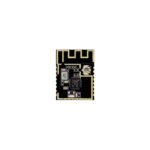
At the hardware level, a typical Bluetooth beacon contains a BLE SoC (such as Nordic nRF52832 or TI CC2640R2), a coin cell or AA battery, a small PCB antenna, and optionally an accelerometer or temperature sensor. The firmware configures the advertising interval, TX power, and payload format, all of which directly affect battery life and detection range.
Core Advertising Parameters and Their Engineering Trade-offs
Understanding beacon performance requires a close look at three key parameters that engineers must configure during deployment:
| Parameter | Typical Range | Effect on Battery | Effect on Accuracy |
|---|---|---|---|
| Advertising Interval | 100 ms – 10,000 ms | Shorter interval = more drain | Shorter = faster detection |
| TX Power | -40 dBm to +8 dBm | Higher power = more drain | Higher = greater range |
| Payload Size | Up to 31 bytes (legacy), 255 bytes (BLE 5.0) | Minimal impact | More data per packet |
For indoor positioning use cases requiring sub-second update rates, setting the advertising interval to 100–200 ms is common. At 0 dBm TX power and 200 ms interval, a 1000 mAh CR123A battery typically lasts 2–3 years. Reducing TX power to -12 dBm can extend battery life to 4–5 years with a modest reduction in usable range.
Beacon Packet Formats: iBeacon, Eddystone, and AltBeacon
The beacon market has converged around three dominant advertising packet formats, each with different use cases:
| Format | Developer | Payload Fields | Best Use Case |
|---|---|---|---|
| iBeacon | Apple | UUID, Major, Minor, TX Power | iOS-centric proximity apps |
| Eddystone-UID | Namespace (10B), Instance (6B) | Fleet management, asset tagging | |
| Eddystone-URL | Compressed URL | Physical Web, NFC-alternative | |
| Eddystone-TLM | Battery voltage, temperature, PDU count | Fleet health monitoring | |
| AltBeacon | Radius Networks | Beacon ID (20B), reserved | Open-standard cross-platform apps |
In enterprise deployments, Eddystone-TLM is frequently used alongside Eddystone-UID in alternating advertising slots. The UID slot provides location identity, while TLM packets (typically broadcast every 10 seconds) report battery level and temperature — giving operations teams visibility into fleet health without physical inspection.
RSSI-Based Distance Estimation: Accuracy and Limitations
Most beacon-based positioning systems rely on Received Signal Strength Indicator (RSSI) to estimate distance. The relationship follows the free-space path loss model:
Distance = 10 ^ ((TxPower – RSSI) / (10 × n))
Where n is the path loss exponent (typically 2.0 in open space, 2.5–4.0 in indoor environments with obstacles). In practice, multipath interference, human body absorption, and furniture reflections cause RSSI to fluctuate ±5–10 dBm at a fixed location, translating to positional errors of 1–3 meters under typical office conditions.
Engineers use several techniques to mitigate this:
- Kalman filtering: Smooths RSSI time series to reduce noise, improving estimated distance stability by 30–50%.
- Fingerprinting: Pre-maps RSSI signatures at known reference points; at deployment time, live readings are matched against the map. Achieves 1–2 m accuracy but requires periodic re-surveying.
- Trilateration with 3+ beacons: Combines distance estimates from multiple beacons to compute a 2D position. Accuracy improves to 1–3 m with well-placed infrastructure.
Beacon Deployment Density and Coverage Planning
Beacon placement follows a coverage radius calculation. At 0 dBm TX power in a typical office environment, the reliable detection radius is approximately 5–8 meters. For a 1,000 m² floor plan, this requires roughly 20–30 beacons to achieve full coverage with 3-beacon overlap (needed for trilateration).
Key installation guidelines:
- Mount beacons at 2.5–3.5 m height on walls or ceilings to minimize body blockage.
- Avoid metallic surfaces within 30 cm — metal reflects BLE signals and creates dead zones.
- Maintain line-of-sight between beacons where possible; concrete walls attenuate signal by 10–15 dB.
- In multi-floor buildings, assign unique UUID or Major values per floor to prevent cross-floor interference.
Security Considerations for Beacon Networks
Standard beacon advertising broadcasts in plaintext and is detectable by any BLE scanner within range. For applications requiring tamper resistance:
- Rotating identifiers: Change the advertised UUID/Instance ID on a time-based schedule (e.g., every 15 minutes using a shared HMAC key). Prevents third-party tracking but requires synchronized key distribution across the scanner infrastructure.
- Encrypted TLM: Eddystone supports an encrypted TLM variant (EID) that rotates the advertised ID, readable only by authorized resolvers with the registered key.
- Physical security: Beacons in public spaces should use tamper-evident enclosures and adhesive mounting to prevent repositioning attacks.
Practical Deployment Checklist
Before going live with a beacon deployment, engineering teams should validate:
- □ TX power and advertising interval calibrated against target battery life requirements
- □ Packet format selected and consistent across the fleet
- □ RSSI floor survey completed and baseline values documented
- □ Beacon placement reviewed against metal obstruction and line-of-sight criteria
- □ Fleet management system configured to receive Eddystone-TLM for battery monitoring
- □ Security policy defined: rotating IDs or plaintext acceptable for use case
A well-deployed Bluetooth Beacon network delivers meter-level accuracy, multi-year battery life, and zero network infrastructure beyond a standard BLE gateway — making it one of the most cost-effective tools in the indoor IoT toolbox.