The Challenge of Static Museum Exhibits
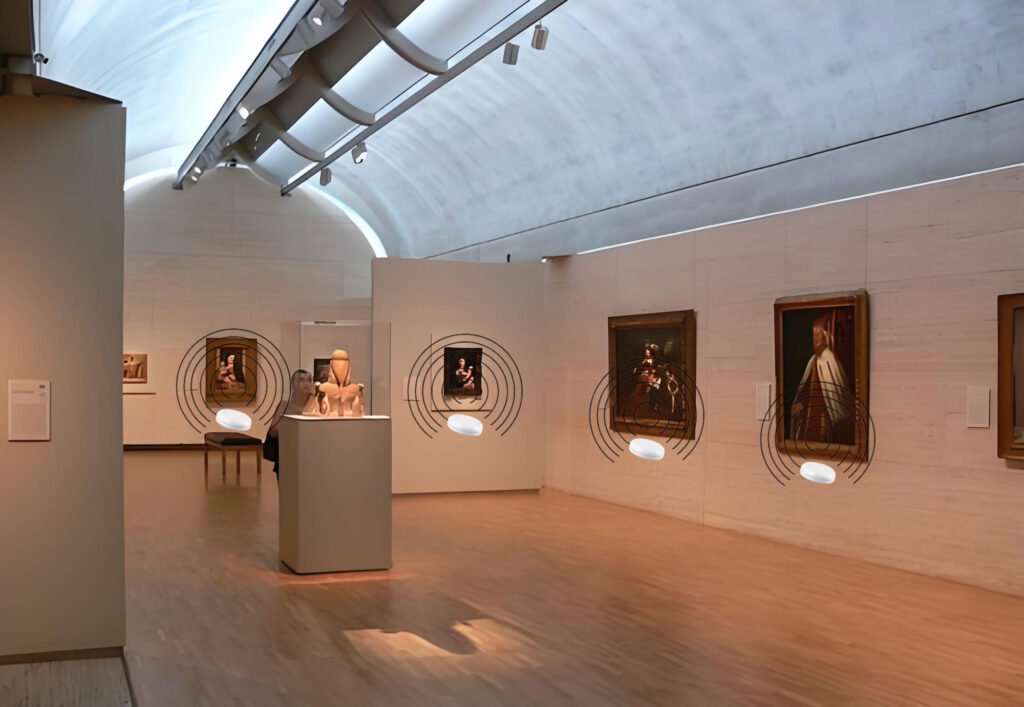
Museums face a persistent engagement problem: visitors spend an average of 7–15 seconds at each exhibit label, and retention rates for printed information drop below 20% within hours. Bluetooth Beacon technology offers a scalable solution by delivering contextual, personalized content directly to visitors’ smartphones as they move through gallery spaces — without requiring dedicated app downloads or complex hardware installations.
System Architecture for Museum Beacon Deployments
A typical museum beacon system consists of four layers:
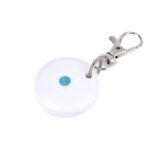
- Beacon layer: Low-power BLE beacons mounted near exhibits, configured with unique UUID/Major/Minor values corresponding to specific artwork locations.
- Gateway layer: BLE-to-Wi-Fi gateways positioned in hallways and ceilings to relay beacon advertisements to the cloud. Each gateway covers approximately 100–200 m² depending on ceiling height and obstructions.
- Cloud platform: Processes incoming beacon data, maintains exhibit content databases, manages visitor profiles and preferences, and serves content via API.
- Visitor interface: A progressive web app (PWA) accessed via QR code on entry. The PWA uses the Web Bluetooth API or native BLE scanning to detect nearby beacons and display relevant content.
Beacon Placement Strategy for Gallery Spaces
Museum environments present unique RF challenges: thick walls, metal-framed display cases, and dense crowds of visitors carrying water bottles and phones that absorb 2.4 GHz signals. Key placement guidelines:
| Placement Factor | Recommendation | Rationale |
|---|---|---|
| Mounting Height | 2.5–3.0 m (ceiling or wall) | Avoids visitor tampering; provides clear line-of-sight |
| Distance from Exhibit | 1.0–2.0 m | Close enough for precise zone detection without signal shadow |
| Metal Display Cases | Mount beacon on case exterior, not inside | Metal shields BLE signals; interior placement reduces range by 70% |
| TX Power | -4 dBm to 0 dBm | Limits detection radius to 3–5 m, preventing cross-exhibit interference |
| Advertising Interval | 500–1000 ms | Sufficient for museum-paced movement; extends battery to 3+ years |
| Density | 1 beacon per exhibit zone | Use unique Minor values per exhibit for granular content delivery |
Managing Signal Interference Between Adjacent Exhibits
In galleries where exhibits are spaced less than 3 meters apart, beacon signals overlap. Two techniques resolve this:
- TX power attenuation: Reduce power to -8 dBm, limiting the effective radius to 2–3 m. Trade-off: visitors with poor BLE reception (older phones, thick cases) may miss detections.
- Weighted RSSI algorithm: When multiple beacons are detected simultaneously, assign content based on the strongest RSSI signal rather than simply the first detected. This provides natural “nearest exhibit wins” behavior.
Content Delivery: From Static Labels to Rich Experiences
Beacon-triggered content can range from simple text replacements to fully interactive experiences:
- Enhanced labels: Audio narration (narrator + background music), high-resolution zoomable images, and multi-language text replacing static printed labels.
- Interactive storytelling: Sequential content delivery as visitors move through a curated path. Beacon A triggers an introduction; Beacon B (5 m away) delivers the next chapter. This creates a guided narrative flow without physical barriers.
- Accessibility features: Automatic text-to-speech for visually impaired visitors, adjustable font sizes, and high-contrast display modes triggered on beacon detection.
- Visitor analytics: Anonymized dwell time per exhibit, gallery flow patterns, and popular route maps. This data informs curatorial decisions about exhibit placement and content updates.
Privacy and Data Compliance
Museum beacon systems must comply with GDPR, CCPA, and regional privacy regulations:
- Opt-in only: Visitors must explicitly enable BLE scanning via the PWA. No background tracking without consent.
- No personal identifiers: Beacon detection events use randomized session tokens, not device MAC addresses (iOS and Android both randomize BLE MAC addresses by default).
- Data retention limits: Anonymized visit data should be retained for no longer than 90 days unless explicit consent is given for longer analysis.
- Transparent signage: Physical signage at museum entrance explaining what data is collected and how it is used.
Power and Maintenance Planning
For a museum with 200 exhibits, deploying 200 beacons at -4 dBm TX power and 700 ms advertising interval:
- Battery life: A standard CR2477 (1000 mAh) battery lasts approximately 3.5–4 years under these parameters.
- Battery monitoring: Use Eddystone-TLM packets (broadcast every 10 seconds alongside UID) to report voltage and temperature. When voltage drops below 2.5 V, the fleet management system generates a replacement alert.
- Replacement cycle: Plan battery swaps every 3 years during scheduled gallery closures. For battery-free alternatives, consider kinetic-harvesting beacons for high-traffic zones where vibration energy is sufficient to maintain charge.
Deploying Bluetooth Beacon infrastructure in museums transforms passive exhibit viewing into active, personalized engagement. With proper placement strategy, privacy-first design, and low-maintenance battery management, beacon systems deliver measurable improvements in visitor satisfaction and exhibit comprehension at a fraction of the cost of permanent interactive installations.