
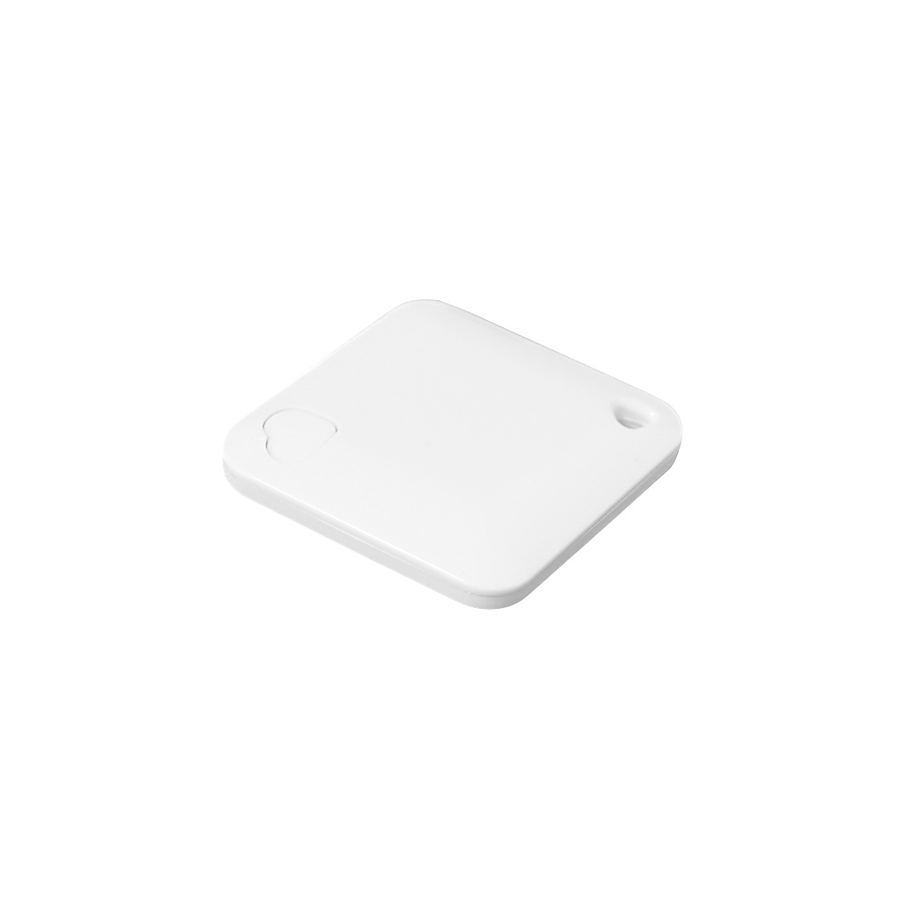
What Exactly Is a Low Power Beacon?
Imagine a matchbox that clears its throat once every second on the 2.4 GHz band, then dozes for the rest of the second. That matchbox is a low power beacon—a Bluetooth Low Energy radio engineered to sip micro-amps so that a coin-cell can last longer than the device it is glued to. It broadcasts only a few bytes of identity, never pairs, never streams, never asks for Wi-Fi. Its entire purpose is to announce, “I am here,” and then fall asleep before the echo fades.
The Physics of a Micro-Amp
A CR2032 cell stores about 220 mAh. At 3 V, that is 660 mWh. A beacon that draws 5 µA while sleeping and 8 mA for 5 ms every second consumes roughly 60 µWh per day. Do the math and you arrive at twelve years—longer than the depreciable life of most pallets, tags, or retail fixtures. The trick lies in keeping the radio off 99.98 % of the time and turning it on just long enough for the antenna to ring.
Sleep Strategies: Deep, Shallow, and Opportunistic
Deep sleep shuts everything except a 32 kHz RTC that wakes the core every advertising interval. Shallow sleep leaves the radio’s front-end powered so that it can wake in 50 µs instead of 2 ms—useful when the interval is unpredictable. Opportunistic sleep steals free milliseconds: if the accelerometer senses motion, the beacon stays awake for three more packets, then collapses back into darkness. The result is a duty cycle that breathes with the environment rather than fighting it.
Energy-Harvesting Sidekicks
Photovoltaic strips under fluorescent tubes can harvest 10 µW/cm²—enough to keep a beacon advertising every five seconds indefinitely. Vibration harvesters on warehouse conveyor belts convert 8 g shocks into 100 µW bursts, topping up a 100 µF super-capacitor that tides the radio over quiet nights. The battery becomes a buffer, not a fuel tank, shrinking replacement logistics to zero.
Antenna Alchemy: Gain Without Pain
A meandered PCB antenna etched on high-Q FR4 can squeeze +2 dBi gain while occupying 8 × 12 mm. That extra gain translates into 25 % less transmit current for the same range. For ultra-low-power designs, engineers bias the antenna trace slightly off-resonance so that the PA delivers only −8 dBm instead of 0 dBm—cutting peak current from 8 mA to 3 mA without sacrificing 10 m range.
Security That Sleeps Too
Rolling identifiers rotate every 15 minutes; the key is derived from a one-way function seeded by a 64-bit factory fuse. Because the CPU is off 99 % of the time, attackers cannot probe the device with power-analysis probes; the radio simply isn’t there to interrogate. Over-the-air updates are signed with ECDSA and compressed to 200 bytes so that the radio is awake for less than 3 ms—barely a blip on the coulomb counter.
Real-World Whisperers
A 50,000-seat stadium tags every seat with a solar-assisted beacon that advertises once every ten seconds. Over a season, the cumulative energy drawn is less than that of a single LED floodlight. In a cold-chain warehouse, temperature-logging beacons spend 99.9 % of their life asleep inside refrigerated trucks, waking only when the door opens to broadcast a 32-byte payload before dozing again. The same battery survives the entire three-year lease of the truck.
The Road Ahead: Towards Zero Maintenance
Printed antennas on recyclable cardboard, MEMS energy harvesters that scavenge micro-watts from HVAC vibrations, and Bluetooth 6.0 channel-sounding will push accuracy to centimetres while keeping the duty cycle below 0.01 %. The beacon of tomorrow will be born, live, and die within the envelope it was shipped in—an ephemeral lighthouse that quietly retires itself when the building is torn down.
Conclusion: The Long Whisper
Low power beacons prove that information does not need volume to travel—it needs patience. By stretching time and squeezing watts, they turn micro-amps into years, making the physical world searchable without ever asking for a power cord. In a culture addicted to louder, faster, brighter, these tiny radios offer a quieter promise: we will still be here, whispering, when the battery finally forgets its own name.