
Indoor Navigation
Products: Bluetooth Module Bluetooth Beacon Gateway
Benefits of Using Bluetooth Beacons for Indoor Navigation
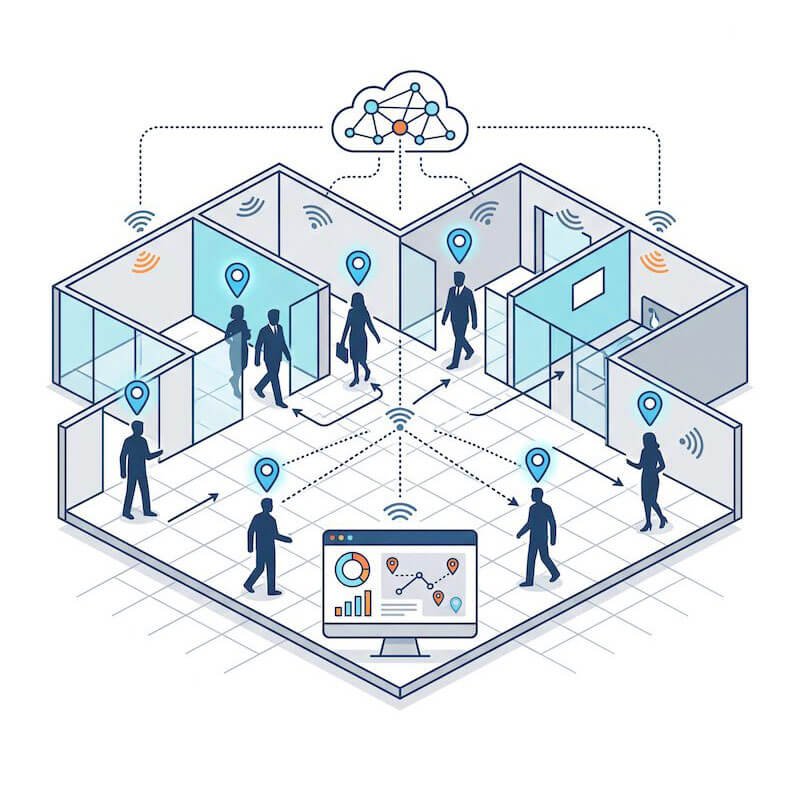
- Precise Indoor Positioning: Bluetooth beacons enable accurate location detection within buildings where GPS signals are unavailable, providing meter-level precision.
- Enhanced User Experience: Users can easily find their way through complex indoor spaces like shopping malls, airports, hospitals, and office buildings.
- Context-Aware Notifications: Trigger location-based information and promotions when users approach specific points of interest.
- Accessibility Support: Help visually impaired individuals navigate indoor environments independently with audio guidance.
- Data Insights: Collect anonymized navigation data to understand traffic patterns and optimize space utilization.
Deployment Strategy
- Site Survey: Conduct a comprehensive survey of the indoor environment to identify coverage areas and potential interference sources.
- Beacon Density Planning: Determine optimal beacon placement density based on required accuracy levels and building layout.
- Signal Optimization: Configure beacon transmission power to balance coverage range and battery life while minimizing signal overlap.
- Platform Integration: Connect the beacon infrastructure with indoor navigation software and mobile applications.
- User Testing: Perform extensive user testing across different scenarios to ensure reliable navigation performance.
Implementation Steps
- Define Navigation Requirements: Identify the types of spaces to be covered and the level of accuracy needed for your use case.
- Create Digital Maps: Develop detailed floor plans and digital maps of the indoor environment for the navigation system.
- Select Hardware: Choose appropriate beacons with suitable range, battery life, and environmental ratings for your deployment.
- Install Beacon Infrastructure: Mount beacons at strategic locations following the planned deployment pattern.
- Calibrate Positioning System: Fine-tune the positioning algorithms using signal strength measurements from multiple beacon positions.
- Develop User Interface: Create intuitive mobile app interfaces that display maps and provide turn-by-turn navigation guidance.
- Deploy and Monitor: Launch the system and continuously monitor performance to make necessary adjustments.
Important Considerations
- Signal Interference: Account for potential interference from walls, metal structures, elevators, and other electronic devices that may affect Bluetooth signals.
- Battery Maintenance: Plan for regular battery replacement or choose beacons with long-lasting power sources to minimize maintenance costs.
- Privacy Protection: Implement strict data privacy policies to protect user location information and comply with relevant regulations.
- Scalability: Design the system to accommodate future expansion as your venue grows or requirements change.
- Multi-Platform Support: Ensure compatibility with both iOS and Android devices for maximum user accessibility.
- Dynamic Environment Adaptation: Consider how temporary obstacles, crowd density, and structural changes may impact navigation accuracy.
Bluetooth Beacons provide a robust and cost-effective solution for indoor navigation challenges. By implementing a well-planned beacon network and integrating it with intelligent navigation software, businesses and organizations can significantly improve wayfinding experiences, reduce visitor frustration, and unlock valuable insights about indoor movement patterns. This technology opens new possibilities for location-based services, emergency response optimization, and operational efficiency in any indoor environment.
Inquiry
Thank you for contacting us!