Bluetooth beacon technology is quietly rewriting the rules of cold chain logistics. From pharmaceutical warehouses to fresh-produce distribution centers, real-time visibility into temperature-sensitive shipments is no longer a luxury—it is an operational necessity. Traditional monitoring systems rely on manual checks or wired sensors that can miss critical fluctuations between inspection points. A wireless BLE tag changes this equation entirely by broadcasting environmental data continuously without waiting for someone to scan a barcode.
The core advantage of a BLE tag in cold chain applications lies in its power efficiency. Running on a coin-cell battery for up to five years, these pocket-sized devices sample temperature and humidity at programmable intervals—every minute, every five minutes, or on demand—and push the readings to nearby gateways. Warehouse managers watching a live dashboard can spot a refrigeration failure in aisle seven seconds after it begins, not hours later when the product is already compromised.
Pharmaceutical cold chains operate under particularly strict regulations. Vaccines, biologics, and specialty medications must remain within narrow temperature windows—often between 2°C and 8°C—throughout transit. Each deviation event requires documentation, root-cause analysis, and sometimes batch rejection. A smart tag embedded in a shipment box records every excursion with a precise timestamp and GPS-correlated location, giving quality-assurance teams an immutable audit trail. Regulatory bodies in the EU and US increasingly accept such electronic records in lieu of paper logs, accelerating approvals and reducing administrative overhead.
Grocery retailers face a different but equally pressing challenge: consumer trust. A customer who encounters spoiled produce recalls that experience every time they return to a store. A smart tag network deployed across a retailer’s distribution fleet provides end-to-end temperature proof from farm gate to store shelf. Some chains already display a QR code on produce packaging linking directly to the temperature history of that specific pallet—a transparency move that measurably improves repeat purchases.
Beyond temperature, modern BLE tags integrate shock and tilt sensors. Wine distributors and electronics manufacturers use this capability to detect rough handling events during overnight transport. If a beacon on a crate of premium bottles registers an impact above two Gs, the warehouse team can quarantine and inspect the shipment before it reaches the retailer, preventing costly returns and reputational damage.
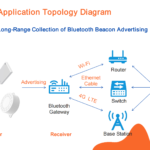
Installation is another area where the technology proves its worth. Unlike wired sensor systems that require ceiling cable runs and proprietary hardware, a Bluetooth beacon network can be deployed in hours. Gateways plug into standard power sockets and connect via Wi-Fi or LTE. Firmware updates push over the air. The total cost of a comprehensive installation across a medium-sized cold-store is a fraction of equivalent wired solutions.
Interoperability is maturing rapidly. Industry consortia have standardized Bluetooth beacon data formats, meaning tags from multiple vendors can feed a single management platform. A third-party logistics provider handling shipments for five different pharmaceutical clients can use one dashboard instead of five, dramatically reducing training time and operational complexity.
The integration of Bluetooth beacon networks with blockchain-based provenance systems is also gaining traction. Each temperature-log entry signed cryptographically on a distributed ledger becomes tamper-evident evidence that a shipment met contractual conditions—useful in disputes between shippers, carriers, and receivers.
The economic case is compelling. Industry research suggests that cold chain failures cost the global food industry over 15 percent of perishable product value annually. A Bluetooth beacon infrastructure that cuts spoilage losses by even a few percentage points typically delivers full return on investment within a single fiscal year, making it one of the highest-ROI bets available to supply chain operators today.