
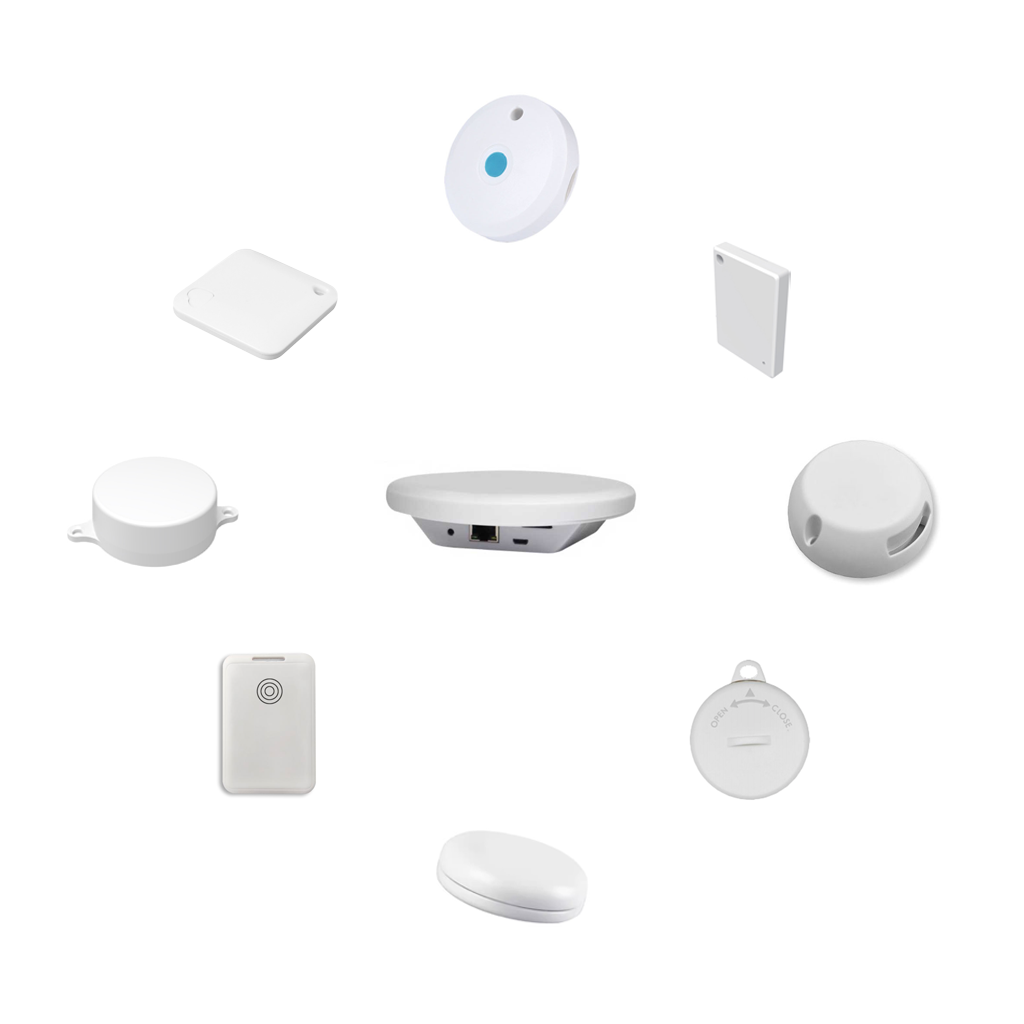
Off-the-shelf hardware rarely fits every use case perfectly, and wireless tracking is no exception. Whether you are building a large-scale venue management system, a niche medical equipment monitoring solution, or a customer engagement platform for a flagship retail store, a generic Bluetooth Beacon will get you only so far. Custom beacon development bridges that gap — giving you precise control over form factor, firmware behavior, power profile, and integration depth.
This article walks through what beacon customization actually involves, where the meaningful decisions lie, and how to approach the process without overcomplicating it.
Why Customization Matters
Most off-the-shelf beacons are designed for the broadest possible market. They ship with standard advertising formats — iBeacon, Eddystone-URL, Eddystone-UID — and a one-size-fits-all enclosure that may be entirely wrong for your environment. A coin-sized beacon works fine taped inside a retail fixture, but it will fail quickly mounted on outdoor infrastructure exposed to rain and temperature swings.
Customization lets you match the hardware to the actual operating conditions. For a cold chain deployment, that might mean a beacon rated for −30 °C with an extended battery capacity. For a hospital environment, it could mean a sealed, sterilizable enclosure that survives repeated disinfection cycles. For consumer electronics, it might mean embedding beacon functionality directly into a product rather than attaching a separate device.
Key Customization Dimensions
Enclosure and form factor. The physical design is often the first and most visible customization. Options range from ruggedized industrial housings with IP67 or IP68 ratings to ultra-thin credit-card formats, wristbands, adhesive stickers, or beacons molded into product casings. Material choice matters too — ABS plastic suits indoor applications, while polycarbonate or aluminum provide better resilience in harsh environments.
Firmware and advertising configuration. Custom firmware unlocks behaviors that standard beacon software cannot offer. You can define proprietary advertising payloads that encode sensor data, device status, or encrypted identifiers directly into the BLE packet. You can implement dynamic advertising intervals that slow down when the device is stationary and speed up upon motion detection, dramatically extending battery life without sacrificing responsiveness.
Integrated sensors. This is where custom beacons move well beyond simple location markers. Adding an accelerometer enables motion-triggered advertising and fall detection. A temperature and humidity sensor turns a beacon into an environmental monitor. Pressure sensors, light sensors, and even basic electrochemical sensors can all be integrated depending on the application. The data collected by these sensors can be embedded in BLE packets or transmitted via a Bluetooth connection to a gateway.
Power architecture. Battery life requirements vary enormously across deployments. A beacon embedded in a shelf label might need three to five years of operation on a single cell. A beacon attached to a high-value asset that is frequently moved and scanned can tolerate more frequent replacement. Energy harvesting options — solar cells, vibration harvesters, or wireless charging — are increasingly viable for installations where battery swaps are impractical.
Security features. For sensitive deployments, custom firmware can implement rotating identifiers to prevent tracking by third parties, encrypted payloads that only authorized receivers can decode, and cryptographic authentication to ensure that beacons cannot be spoofed or cloned.
The Development Process
A realistic custom beacon project follows a clear sequence. It starts with a requirements definition phase — nailing down the operating environment, required sensor suite, expected battery life, production volume, and target cost. From there, the hardware team selects a BLE SoC (common choices include Nordic Semiconductor’s nRF52 series and Silicon Labs EFR32 family) and designs the PCB around it.
Firmware development runs in parallel. The BLE stack, sensor drivers, power management logic, and any custom advertising protocols are written and tested on development boards before the custom hardware is ready. This parallel track saves significant time in an industry where PCB prototyping cycles can take three to six weeks.
Enclosure design follows hardware validation. Mechanical engineers work from the PCB dimensions and environmental requirements to produce a housing that protects the electronics, accommodates any necessary mounting points, and — for consumer-facing products — meets aesthetic standards.
Choosing a Development Partner
Not every organization has the in-house expertise to take a custom beacon from concept to production. Working with an experienced manufacturer who handles both hardware and firmware development under one roof simplifies project management and reduces the risk of integration issues between components developed separately.
Look for partners with a track record in BLE product development, demonstrated experience with the relevant certifications (CE, FCC, MIC, RoHS), and the production capacity to scale from prototype quantities to tens of thousands of units without compromising quality.
Done right, a purpose-built Bluetooth Beacon delivers capabilities no generic product can match — and that advantage compounds over time as your deployment scales and your data requirements grow more sophisticated.