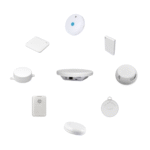

Bluetooth Beacon technology has quietly become one of the most practical tools in modern retail asset management — yet many store operators still underestimate its potential. Walk into any large-format retail environment today, and chances are that trolleys, carts, display units, and high-value merchandise are either being tracked inefficiently or not at all. That gap represents a real cost: lost equipment, misplaced stock, and wasted staff hours searching for items that should be easy to locate.
The core appeal of deploying beacons in retail lies in their passive, always-on nature. Unlike active RFID systems that require handheld readers, or camera-based tracking that demands significant infrastructure investment, beacon-based systems work continuously in the background. Each beacon transmits a short BLE advertising packet at configurable intervals — typically every 100 milliseconds to a few seconds — and fixed receivers or smartphones pick up these signals to log location data without any manual intervention from staff.
How Retail Asset Tracking Works in Practice
A typical deployment starts with attaching small, battery-powered beacons to assets you want to track. These might be shopping carts in a grocery chain, rolling racks in a fashion store, or temperature-sensitive display units in a pharmacy. Ceiling-mounted BLE gateways installed across the shop floor receive beacon signals and forward them to a central management platform via Wi-Fi or Ethernet. The platform processes signal strength data from multiple gateways to triangulate each beacon’s approximate position, updating a visual floor map in near real time.
This setup enables a range of operational improvements. Store managers can check asset distribution at a glance — spotting whether too many carts have accumulated at one entrance, or whether a rack of seasonal products has been moved to an unfavorable location. Alerts can be configured to trigger when an asset leaves a defined zone, which is particularly useful for deterring equipment theft or unauthorized movement of high-value display fixtures.
Battery Life and Maintenance Considerations
One practical concern that often comes up is battery longevity. Most retail-grade beacons run on CR2477 or AA lithium cells and, when configured at moderate advertising intervals, deliver between one and five years of continuous operation. Some models feature replaceable batteries to extend service life, while others are designed as sealed, single-use units that are simply swapped out when depleted. Choosing the right form factor depends on your replacement cost tolerance and whether trained technicians are available on-site.
Firmware updates are another maintenance factor worth planning for. Modern beacon platforms support over-the-air configuration changes, allowing administrators to adjust advertising intervals, transmission power, and sensor thresholds remotely. This capability is invaluable across multi-store deployments where physically accessing each device would be prohibitively time-consuming.
Integration with Existing Retail Systems
The real multiplier effect comes from connecting beacon data to existing retail management software. When location data feeds into your inventory management system, you can correlate asset position with sales floor activity, identify bottlenecks in merchandise flow, and generate evidence-based decisions about store layout. Some retailers have linked beacon platforms to their point-of-sale systems to automatically associate specific carts or baskets with transaction data, opening the door to powerful analytics around customer journey and dwell time.
Security and privacy compliance are legitimate concerns in this context. Retail beacon systems track equipment identifiers, not individuals, which generally keeps them outside the scope of consumer privacy regulations. That said, any customer-facing beacon application — such as proximity marketing or loyalty program triggers — requires clear disclosure and opt-in consent to remain compliant with GDPR and similar frameworks.
Getting Started
For retailers evaluating their first deployment, a phased pilot covering one store zone is the most sensible approach. Define clear KPIs upfront — equipment utilization rate, average search time, shrinkage reduction — so you can quantify ROI before scaling. Hardware costs have dropped substantially over the past few years, and managed beacon platforms now offer subscription models that minimize upfront capital expenditure.
When properly implemented, a Bluetooth Beacon-powered asset tracking system pays for itself faster than most retailers expect — often within a single fiscal quarter — by recovering equipment that would otherwise walk out the door and giving operations teams the visibility they need to run a tighter, more responsive store floor.