A product manager once asked me, flat out: “Why don’t we just put the Bluetooth in our own chip?” Good question. The honest answer took a week of spreadsheets and one uncomfortable meeting with the CFO.
The sticker price is a lie
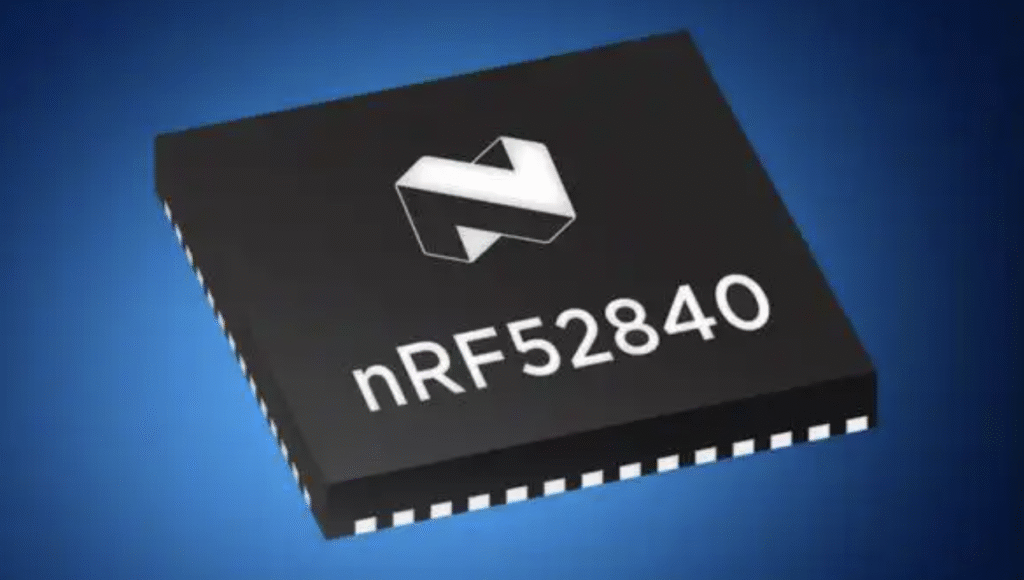
A Bluetooth module runs you three to five dollars at volume. A bare SoC is one twenty. If you only read the BOM, the SoC wins by a mile and the meeting ends in five minutes. But the BOM is the part that’s easy to see, and the easy part is rarely the part that kills you.
NRE is the real tax
Certifying a wireless product is not a checkbox. FCC, CE, TELEC if Japan is in scope — each one wants testing, each one wants money, and each one wants months. A full RF certification for a custom board runs fifteen to forty thousand dollars and eats six to twelve months of calendar. You also need an RF engineer who has done this before. Most teams that ask “why not build it?” don’t have that person, and hiring one for a single product is its own bad deal.
When the module is the right answer
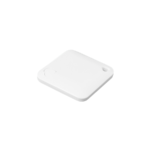
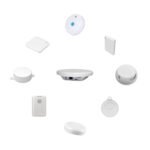
Low volume is the obvious case. Under fifty thousand units a year, the per-unit saving from a SoC never pays back the certification you fronted. Speed is the other: a Bluetooth module drops onto your board in an afternoon, with antennas and stack already settled. No RF team? The module is doing that work for you, silently, for four bucks.
When rolling your own actually pays
Above two hundred thousand units, the math flips. That four-dollar gap is eight hundred thousand dollars a year — more than enough to fund the certification and the engineer. And if the radio is your product’s whole pitch, owning it means you can tune what a module won’t let you touch. I’ve watched one team ship two million units a year. For them the SoC wasn’t a choice. It was the only path that cleared margin.
The trap nobody warns you about
Here’s the part that bites. Buy a pre-certified Bluetooth module and you inherit its modular approval — your product rides the module’s paperwork, mostly. Build your own and you certify the whole device, every revision, every time a trace moves. A module doesn’t just save you money. It saves you from yourself when the board changes at the last minute.
The debugger you forgot you’d need
A SoC means you own the firmware down to the link layer. When pairing stalls, you dig. A module hands you a finished stack and a UART for AT commands — less control, a lot less pain. We’ve seen teams pick the SoC for “flexibility” and then spend a quarter debugging a stack they could have bought. Flexibility you never use is just debt with a nicer name.
What we actually shipped
Concrete, not theory. A client building thirty thousand sensor tags a year: we put a Bluetooth module on it and they launched in nine weeks, never opening an RF lab. Another client, a consumer gadget at two million units: we went SoC, ate the NRE, and the per-unit saving paid for the next product. Same question, opposite answer, because the volume was opposite. There is no rule that survives contact with your actual shipment number.
The thing nobody mentions: the supply chain
A module locks you to one vendor’s footprint and their lead time. During the 2021 shortage that stung a lot of teams who couldn’t swap. A SoC you source yourself, but you also own the inventory and the obsolescence. Neither is safe. One just hands the risk to a supplier; the other hands it back to you.
If I had to do it again
I’d ask one question before any spreadsheet: how many are we really going to sell, and does the radio matter to the pitch? Under fifty k or a fast launch, buy the Bluetooth module and sleep. Over two hundred k with the radio as the differentiator, spin the SoC and budget the pain. The middle is a coin flip, and that’s the only honest thing to say about it.