
A retail chain runs 2,000 beacons across 80 stores. In a normal week, 14 of them go silent. Nobody notices — until a locator app returns “no signal” and a shopper complains. The hardware worked. The data did not. A Beacon is only as useful as what you do with the stream it throws off.
The raw signal is garbage
A beacon broadcasts a number: received signal strength, in decibels. One reading is noise. Walk three steps and it swings 8 dB. Turn your body and it drops 12. A single RSSI sample tells you almost nothing, and anyone who has built a locator on raw values has watched it jitter across the map. The fix is not a better beacon. It is a data layer that treats each reading as one vote, not the verdict.
Build the pipeline first
Before any fancy model, get the plumbing right. Each beacon should tag every advertisement with a timestamp and a sequence number, then ship it to a store-and-forward buffer. A typical store emits 40,000 beacon messages an hour; at 80 stores that is 3.2 million rows an hour. You do not analyze that on the device. You batch it, compress it, and push it to a time-series store where the anomaly jobs can read it without melting the gateway.
Smooth before you trust
A rolling median over 10 samples kills most jitter. A Kalman filter does better when the target moves, because it weighs new readings against a predicted path. For a beacon-based locator we usually blend both: median to strip spikes, Kalman to track motion. The result is not magic — it is the difference between a dot that crawls along walls and one that actually follows a person. The cost is latency; a 2-second smoothing window means a 2-second lag, and that lag matters near a doorway.
Fingerprinting needs a map
Trilateration math assumes clean distances. Real buildings laugh at that. Fingerprinting instead records what each location looks like — the RSSI from every beacon at point A, every beacon at point B — and matches live readings to the closest stored pattern. A Beacon deployment that wants good indoor accuracy builds this radio map once, with a walk of the floor, and updates it when walls move. Skip the map and you get a system that is confident and wrong.
Anomaly detection that pays
This is where a beacon fleet earns its keep. Three patterns matter. First, a beacon that suddenly reports 20 dB weaker than its own baseline is dying or covered — flag it before a customer finds out. Second, a reading that arrives out of sequence hints at a replayed or spoofed signal. Third, a zone where foot-traffic triples every Tuesday at 2 p.m. is not an error; it is a restock window you can staff for. The model is boring: compare today to a 30-day baseline per beacon, per hour, and scream when the gap crosses a threshold.
Predict a dead battery
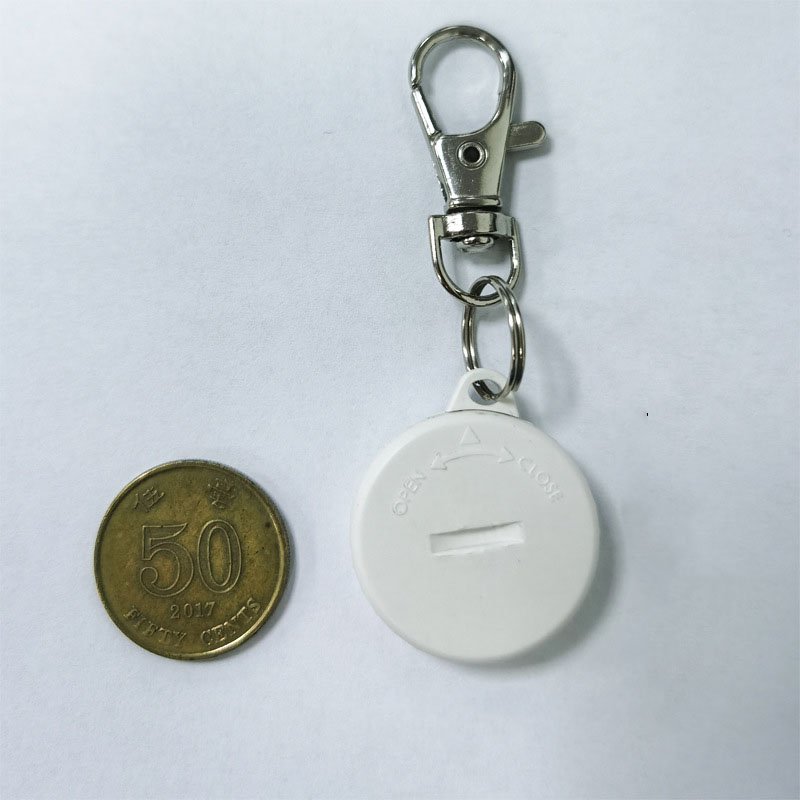
A beacon on a coin cell lasts one to three years, but it dies one day. Instead of waiting, track the advertisement interval drift and the RSSI stability week over week. A failing Beacon cell gets noisy before it goes dark, and that noise is detectable 3 to 6 weeks early. We schedule replacements into the same truck roll that fixes the dead ones, so a store never sees two outages from the same beacon. The prediction is not a guess. It is a slope.
Visualize for humans
Engineers love raw dashboards. Operators do not. The useful view is a floor plan with green, yellow, and red dots — green means healthy, yellow means drifting, red means silent for over an hour. Click a dot and you get the last 24 hours of that beacon’s signal as a line, not a table. A regional manager should answer “which store is unhealthy” in ten seconds, not ten minutes. The data intelligence is wasted if only the person who wrote it can read it.
Privacy in the data layer
A beacon that tracks people also tracks humans, and that attracts lawyers. The cheap fix is to hash the device identifier at the gateway so the time-series store never sees a real MAC. The better fix is to keep only aggregates — “12 devices in zone C at 3 p.m.” — and drop the individual trails after an hour. A beacon system that respects minimization passes audit; one that hoards every step does not, and the fine is larger than the fleet.
One deployment, reconstructed
A hospital ran 600 beacons for wayfinding and saw locator complaints climb for a month. The root cause was not the beacons. It was a gateway that buffered but never flushed, so the anomaly job trained on three-day-old data and missed 40 silent units. Adding a flush watchdog and a per-beacon heartbeat check dropped “no signal” tickets by 90 percent in two weeks. The beacon hardware never changed. The data layer did.
The trade you accept
More intelligence costs more compute and more discipline. A longer baseline detects slower drifts but misses fast spikes. Heavier smoothing removes jitter but hides a real sudden move. A Beacon deployment that turns its stream into decisions — not just dots — is the one that survives contact with a real building. Pick the lag you can afford, then build the pipeline that honors it.