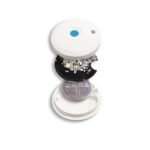
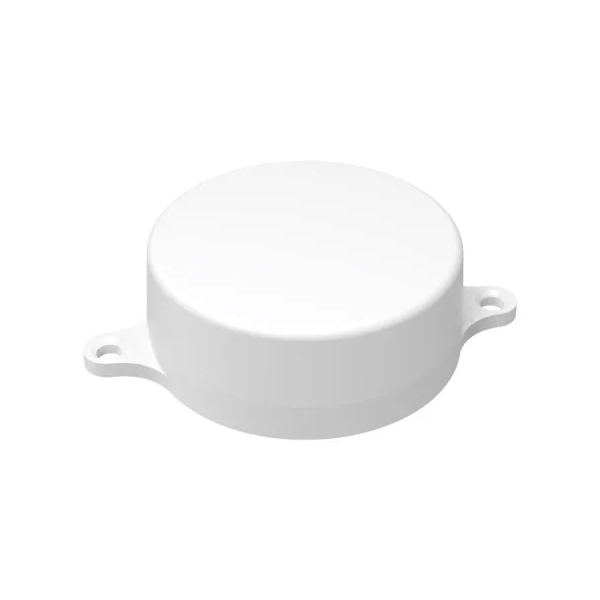
A buyer forwarded me a datasheet: “200 meters.” He’d stuck the BLE Tag on a pallet, and it dropped off the gateway at nineteen meters past the door. The number on the page was real. The number in his warehouse was the truth. They were not the same thing.
What “200m” actually means
Open the fine print and it says “open field, line of sight, one meter high.” That’s a field with no walls, no racks, no people. Nobody mounts a BLE Tag in a field. The test rig sits the tag and the receiver on tripods in the middle of nowhere, and even then the threshold is one packet a second at the edge. Move, and it’s gone.
Walls are the first tax
A single cinderblock wall took one tag from 200 to 70 in our hallway test. A steel rack did worse. Every surface between the BLE Tag and the gateway is a bill, paid in meters. The spec never itemizes it. We stopped quoting the open-field number to customers after the third angry call.
The body is a blocker too
Hold a BLE Tag in your hand and you’ve already lost three to five decibels, because you are mostly water and water eats 2.4 gigahertz. A person standing between tag and gateway shadows it further. The advertised range assumes nobody is there. In a real warehouse, somebody is always there.
How we test now
We dropped the tripods. We tape the BLE Tag to an actual pallet, wheel it down the real aisle, and log where the gateway stops getting packets. The number that ships in the report is the one the customer will see: nineteen meters through a loaded rack, sixty down a clear lane. We tell them both. The 200 is still true. It’s just not theirs.
What I tell buyers now
Ask for the test condition, not the number. Line of sight or through your racking? One packet a second or ten? At the height you’ll actually mount it? A BLE Tag that’s honest about its range is worth more than one with a bigger font on the box. We learned that the expensive way, on the phone, with a customer who’d already bought the wrong one.