
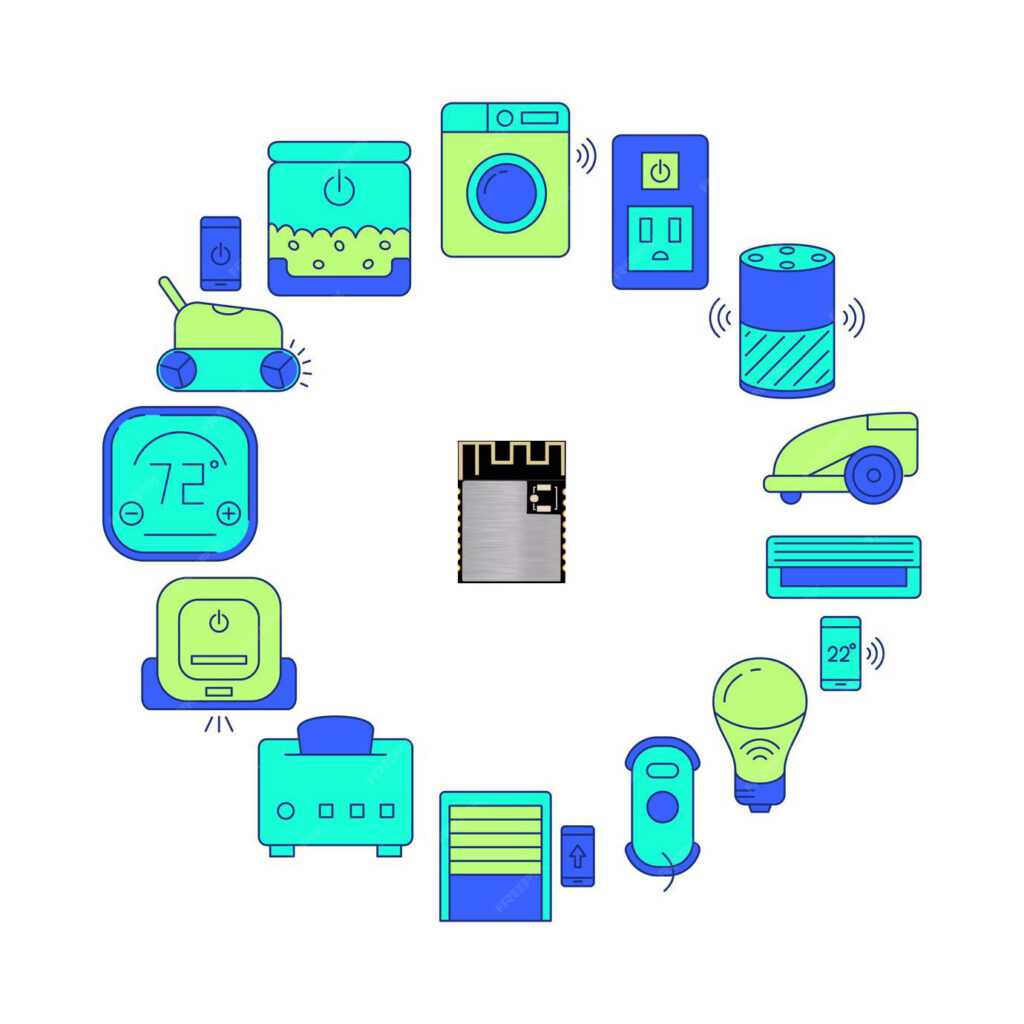
Bluetooth module technology has become a cornerstone of smart home and building automation systems, enabling seamless wireless communication between devices, sensors, and control interfaces. As demand for intelligent living and working environments grows, engineers and product developers increasingly rely on compact, energy-efficient Bluetooth solutions to build reliable connected ecosystems.
A Bluetooth module is a self-contained hardware component that integrates the radio transceiver, baseband processor, and protocol stack required to establish Bluetooth communication. By incorporating a pre-certified module into a design, developers can bypass the complex RF engineering process and accelerate time to market. This plug-and-play approach is particularly valuable in smart home applications where development cycles must be short and certification costs must be controlled.
In smart home environments, Bluetooth modules enable a wide spectrum of use cases. Smart lighting systems use Bluetooth mesh networking to allow individual bulbs to communicate with one another, creating self-healing networks that extend coverage across large floor plans without relying on a central hub. Thermostats, door locks, window sensors, and energy monitors all benefit from low-latency Bluetooth connections that deliver responsive control through smartphone apps or voice assistants.
Building automation takes these capabilities a step further. HVAC systems equipped with Bluetooth-enabled controllers can receive occupancy data from room sensors and adjust temperature and airflow in real time, significantly reducing energy waste in commercial properties. Access control panels integrated with Bluetooth modules support mobile credentials, allowing employees to unlock doors with their smartphones rather than physical key cards. This reduces administrative overhead and enables instant remote revocation of access rights.
Power consumption is a critical consideration in both residential and commercial deployments. Modern Bluetooth Low Energy modules can maintain persistent connections while drawing only a few microamperes in idle mode. This makes them ideal for battery-operated devices such as door and window sensors, occupancy detectors, and remote controls that must operate for years without maintenance. Some modules support energy harvesting techniques, drawing power from ambient light or motion to eliminate batteries entirely.
Antenna design and RF performance are equally important factors when selecting a Bluetooth module for building automation. Reinforced concrete walls, metal enclosures, and dense electronic environments can attenuate wireless signals significantly. Modules with external antenna connectors or high-sensitivity receivers are better suited to these challenging conditions. Mesh networking protocols such as Bluetooth SIG Mesh further enhance reliability by allowing messages to hop across multiple nodes until they reach their destination.
Security is a top priority in any connected building environment. Contemporary Bluetooth modules implement AES-128 encryption and LE Secure Connections pairing to protect data in transit and prevent unauthorized device access. Over-the-air firmware update capabilities allow manufacturers to push security patches and feature enhancements without requiring physical access to installed hardware, which is especially important in large commercial deployments.
Integration with cloud platforms and voice control ecosystems adds another layer of value. Many Bluetooth modules support bridge designs that connect local Bluetooth networks to Wi-Fi or Ethernet, enabling remote monitoring and control through cloud dashboards. Compatibility with platforms such as Amazon Alexa, Google Home, and Apple HomeKit allows residents and facility managers to use natural language commands to control lighting, climate, and security systems.
As smart buildings evolve toward fully autonomous operation, the role of wireless communication hardware will only grow. Selecting the right Bluetooth module for a specific application requires careful evaluation of range, power budget, protocol support, and form factor—but the investment pays off in the form of faster development, lower maintenance costs, and a more responsive, energy-efficient built environment.